
Types of fades: low, mid and high, taper, skin and more
Ask for “a fade” and you could leave with anything from a barely-there blend to sides shaved almost to the skin. Fades vary in three ways: how high they go, how short they get, and the shape they follow. This guide covers all the types of fades, with diagrams, so you can ask for exactly the one you want.
A fade is a haircut where the sides and back get gradually shorter towards the bottom, blending into longer hair on top. Fades are described by height (low, mid or high), by how short they go at the bottom (skin or shadow), and by shape (drop, burst or temple). A taper is the softer cousin: it only shortens the hair at the neckline and sideburns.
Low vs mid vs high fade
The height of a fade is how far up your head the short section goes before it blends into the longer hair. It is the biggest choice you will make, because it decides how bold the cut looks and how much scalp shows.

Low fade
The short section stays just above the ears and along the neckline. It is the most subtle option: clean around the edges, with most of the sides still covered. A low fade suits almost any workplace and grows out gently, which makes it a safe first fade.
Mid fade
The short section reaches roughly the temples, about halfway up the sides. It is the balanced middle ground: clearly a fade, without being extreme. If you can't decide, a mid fade is the usual default.
High fade
The short section climbs most of the way up the sides, to around where the head starts to curve. It creates the most contrast with the hair on top and shows the most scalp, so it looks bold and sharp, and it is also the quickest to look grown out.
Not sure which height? Start lower. A barber can always take a fade higher in the same appointment, but can't put hair back.
Taper vs fade: what's the difference?
Both blend short hair into longer hair, but they cover very different amounts of your head.

- A taper only shortens the edges: the neckline at the back and the sideburns. The sides stay mostly full, so it looks classic and grows out slowly.
- A fade blends all the way around the sides and back, usually much shorter at the bottom. It has more contrast, and more upkeep.
The “taper fade” problem
“Taper fade” is one of the most common requests and one of the most confusing, because barbers read it differently: many give you a taper, others give you a low fade. The low taper fade is a popular look right now, and it is one of the styles in FADR's haircut browser. To avoid surprises, describe what you want instead of only naming it:
- Just the edges cleaned up: “A taper at the neckline and sideburns, natural length on the sides.”
- A soft fade that stays low: “A low taper fade: short around the ears and neckline, blended out low, not past the temples.”
- Down to the skin: “A low skin fade.”
How short: skin fade vs shadow fade
Height is how far up a fade goes. Length is how short it gets at the very bottom, and any height can be combined with any length: a mid skin fade, a high shadow fade, and so on.
- Skin fade (also called a bald fade): the bottom is taken down to bare skin, usually with an open blade, a foil shaver or a razor. It has the most contrast, but regrowth shows within days.
- Shadow fade: the bottom stops at a very short guard, usually a #0.5 or a #1, so a shadow of hair remains. It is softer than a skin fade, gentler on sensitive skin, and grows out more evenly.
- Regular fade: the bottom stops at a #1 or #2. It is the gentlest blend, and the least likely to show the scalp.
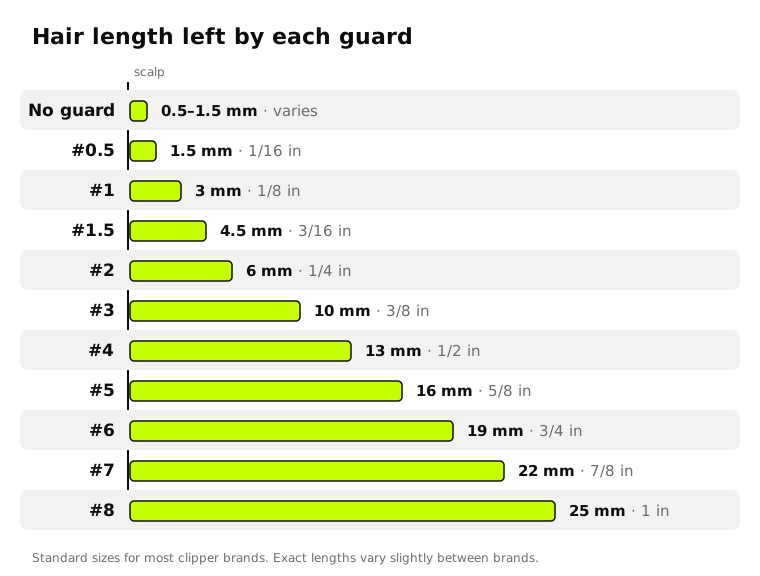
For the exact length each guard leaves, see the clipper guard size chart.
Fade shapes: drop, burst and temple fades
Most fades run level around the head. These three follow a different line.

Drop fade
The fade line curves down behind the ear towards the nape, instead of running level around the head. It follows the natural shape of the skull and gives a sculpted, modern look. Drop fades can start low, mid or high.
Burst fade
A half circle of short hair around the ear, with the back left longer. It is the classic partner for mohawks, faux hawks and mullets, and works especially well with curly and textured hair.
Temple fade
Also called a temp fade or Brooklyn fade, it keeps the fade to the temples and sideburns, usually with a crisp line-up at the hairline. The rest of the sides stay fuller, which makes it popular with natural and coily hair.
Guard numbers for each fade
These are common starting points, not fixed rules. Barbers adjust them to your hair's thickness and the length on top.
| Fade | Bottom, blending into | Goes up to |
|---|---|---|
| Taper | #1 at the edges, into a #3 or #4 | Neckline and sideburns only |
| Low fade | Skin or #0.5, into a #2 or #3 | Just above the ears |
| Mid fade | Skin or #0.5, into a #3 | Around the temples |
| High fade | Skin, into a #2 or #3 | Near the top of the sides |
| Shadow fade | #0.5 or #1, into a #3 | Any height |
If the hair on top is long, ask for the blend to finish on a longer guard, so the step between the sides and the top isn't too sudden.
Which fade should you get?
By the look you want
- Subtle and professional: a taper or a low fade.
- Balanced: a mid fade, with a shadow or skin bottom.
- Bold and sharp: a high fade or a skin fade.
By your hair
- Curly and coily hair: fades suit it well, because the short sides make the texture on top stand out. Burst and temple fades frame volume without cutting it back.
- Thick, straight hair: mid and high fades take bulk out of the sides, which stops the cut looking wide.
- Fine or thinning hair: low fades and tapers keep more coverage. A high skin fade can make a thin top look thinner by contrast.
By face shape
These are guidelines, not rules. A mid or high fade with height on top makes a round face look longer. A low fade keeps width at the sides, which balances a long face. Square and oval faces suit most heights. Not sure of your shape? Here is how to find your face shape.
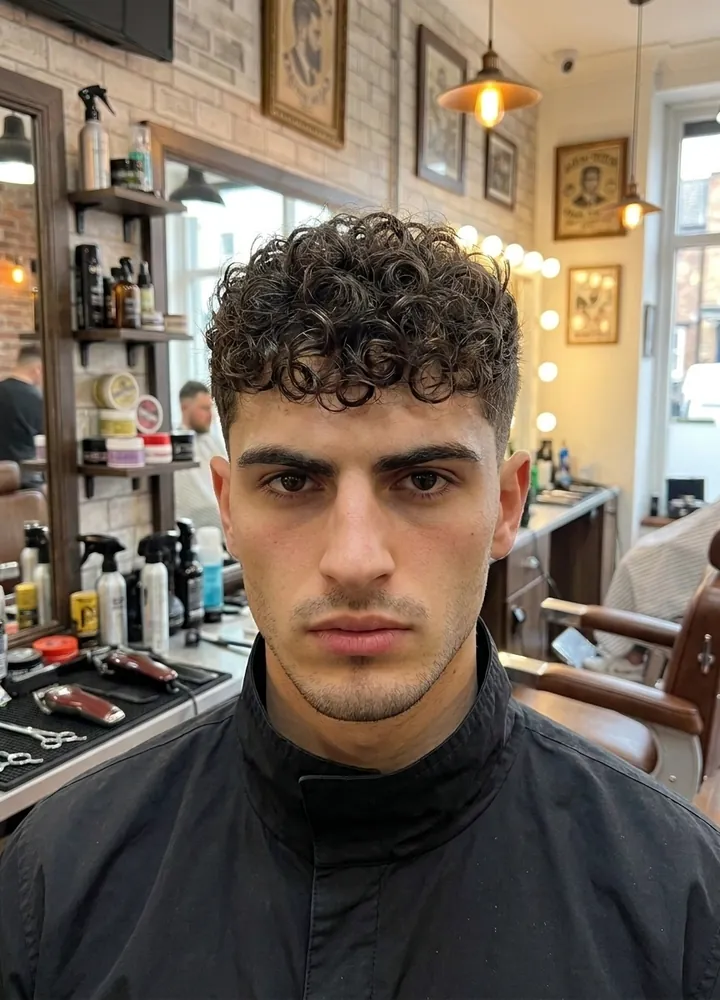
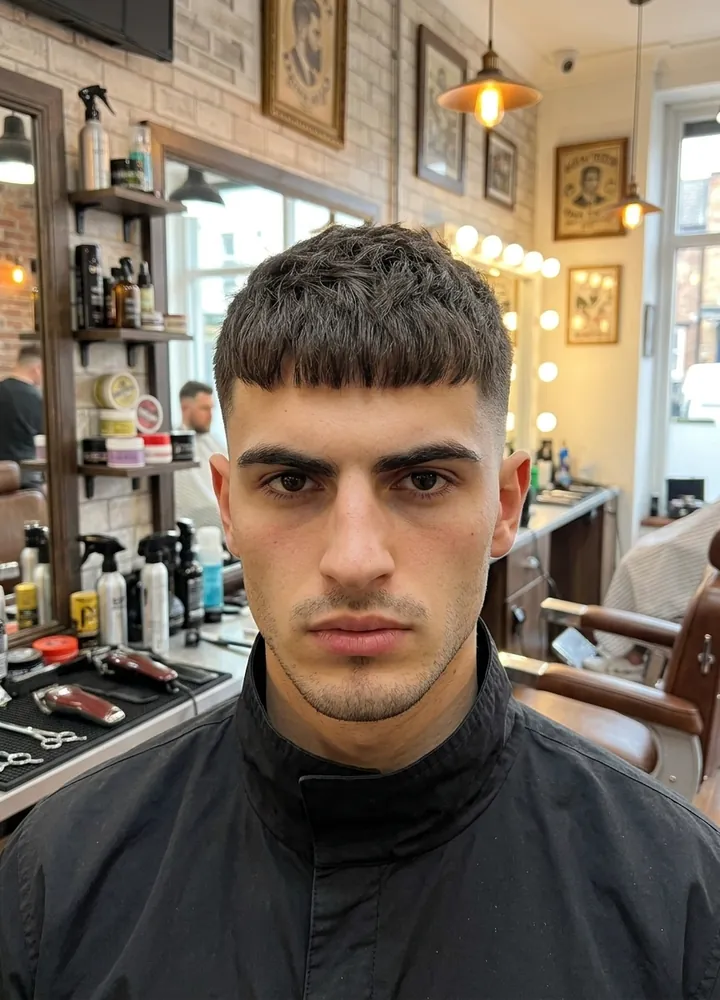
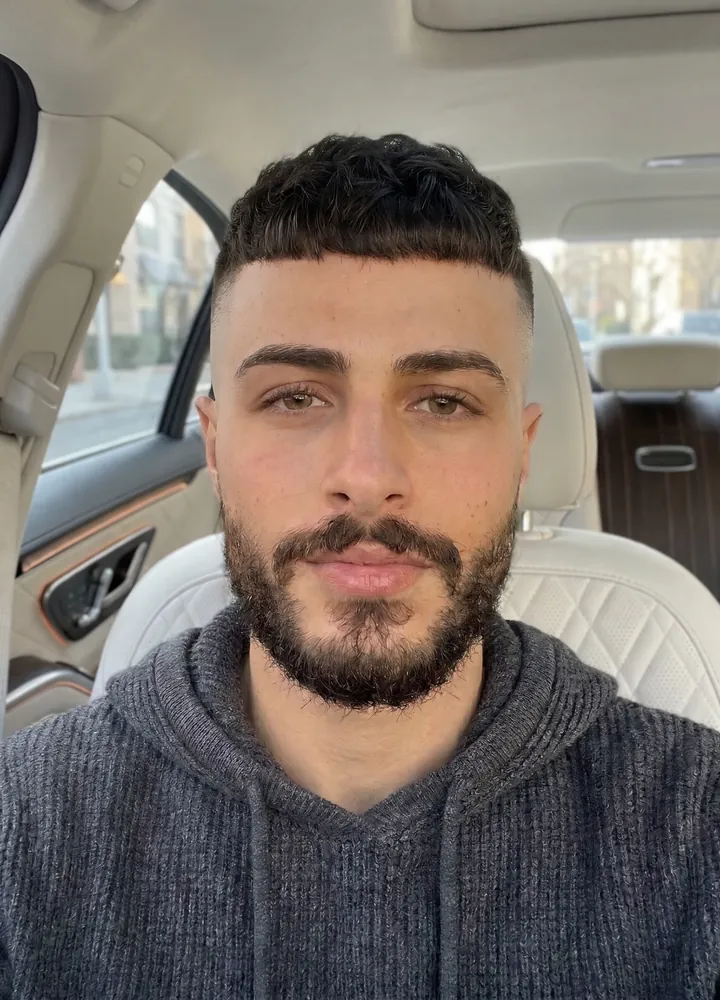
Two real fades, tried in FADR
Both men tried these fades on their own photo in FADR. A fade changes the shape of your whole head, so seeing it on you is the quickest way to choose a height. Drag either photo to compare.

How often you need a touch-up
Hair grows about 1 to 1.5 cm a month (around half an inch), and the shorter the bottom of a fade, the sooner that growth shows. As a rough guide:
| Fade | Looks sharp for | Touch-up every |
|---|---|---|
| Skin or high fade | About 1 to 2 weeks | 2 weeks |
| Mid fade | About 2 weeks | 2 to 3 weeks |
| Low fade | About 2 to 3 weeks | 3 weeks |
| Taper | About 3 to 4 weeks | 3 to 5 weeks |
What to say to your barber
Low taper fade: A low taper fade, short around the ears and neckline, blended out low, and about 3 inches on top.
Mid skin fade: A mid skin fade up to a 3, with about 2 inches on top, textured.
High fade: A high skin fade blended into a 2, and keep the top long for a quiff.
Drop fade: A mid drop fade, curving down behind the ear to the neckline.
Burst fade: A burst fade around the ears, and leave the back long.
Bring a side photo and a back photo if you can: most of the difference between fades sits around the ears and the neckline. And say how you style the top, so the blend matches it.
See a fade on your own head first
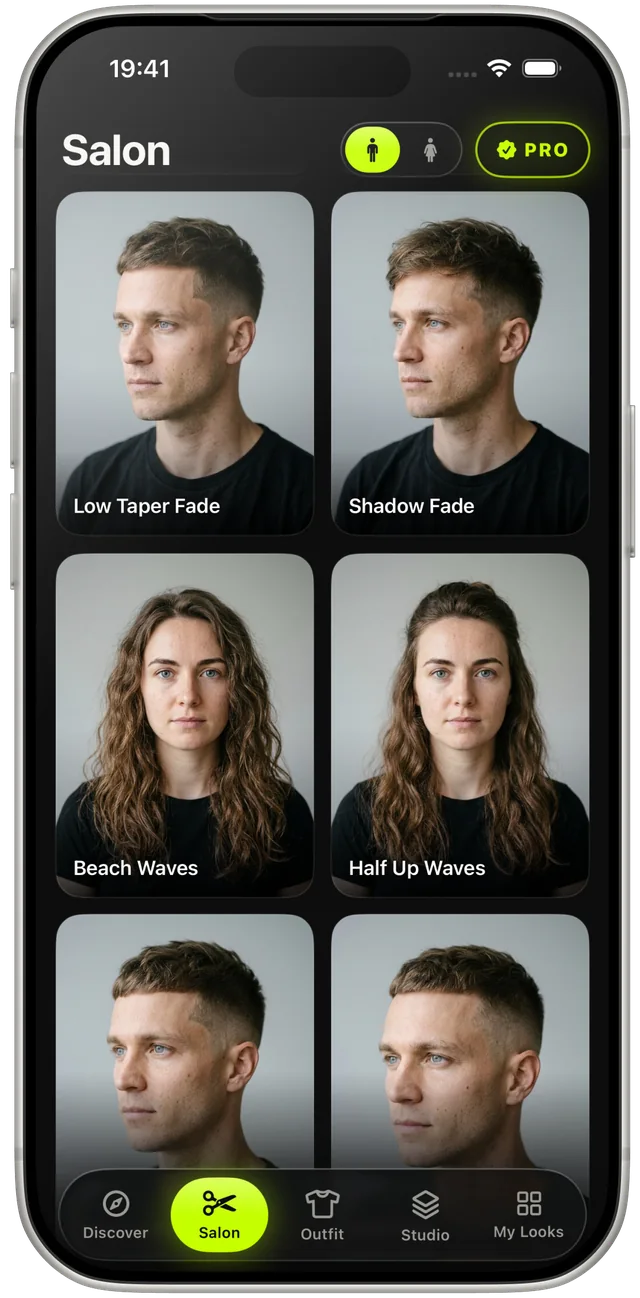
FADR's haircut browser includes fades like the Low Taper Fade and the Shadow Fade. Try a few on a selfie, compare heights side by side before you commit, and show your barber the one you like, along with the barber notes that come with it.
Questions about fades
Is a taper the same as a fade?
No. A taper only shortens the hair at the neckline and sideburns. A fade blends shorter all the way around the sides and back, usually much closer to the skin.
Is a skin fade the same as a bald fade?
Yes. Both mean the bottom of the fade is shaved down to bare skin. Barbers use the two names interchangeably.
Which fade is the lowest maintenance?
A taper, followed by a low fade that stops at a guard rather than skin. Both grow out gradually, so they still look tidy after three or four weeks.
Do fades work on curly hair?
Yes, and they often look their best on curly and coily hair, where the contrast between short sides and texture on top really stands out. Burst and temple fades are especially popular.
What's the difference between a low fade and a low taper?
A low taper only cleans up the neckline and sideburns. A low fade blends shorter all the way around the head, just above the ears. If you're unsure which you want, describe where the short hair should stop rather than using either name.
What fade should I get for my first one?
A low or mid fade that stops at a short guard rather than skin. It is noticeable but forgiving, and you can always go higher or shorter next time.
See any cut on your own face
Take a selfie and try hairstyles in seconds. No account needed.
More guides
How to know if a haircut will suit you before you cut it
Face shape, hair type and upkeep decide whether a haircut suits you. Here's how to check each one, with real before-and-after results.
Haircut numbers explained: a clipper guard size chart
What #1, #2, #3 and other haircut numbers mean in millimetres and inches, how fades use them, and exactly what to say to your barber.